Register for the free Neuroplasticity TRAINING
🔒 Your information is secured and will not be shared

free live training
The Truth About Neuroplasticity:
You Don't Have a Knowledge Problem. You Have an Application Problem.
- Have you experienced real wins using neuro techniques: eye exercises, cranial nerve drills, vestibular resets, only to hit that first big change and immediately feel overwhelmed by "okay... now what?"
- Are you already getting great results in your practice, but curious how to add a neuro lens without throwing away the techniques you've spent years building?
- Do you already understand the theory of neuroplasticity, but want an adaptable framework that tells you exactly how to organize its key components into real application in the clinic or studio?
- Have you ever finished a CE course able to recite the research and the buzzwords, but still felt like you were guessing which tool to reach for with the client actually in front of you?
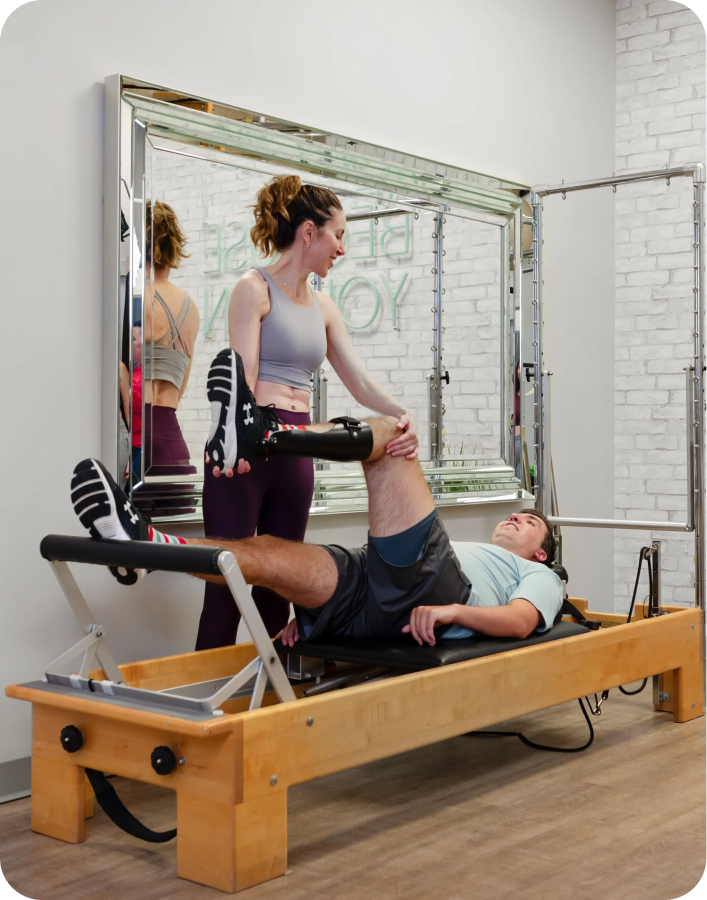
- Are you already getting great results in your practice, but curious how to add a neuro lens without throwing away the techniques you've spent years building?
- Are you familiar with the theory of neuroplasticity, but want an adaptable framework that tells you exactly how to organize its key components into real application in the clinic or studio?
- Have you experienced real wins using neuro techniques: eye exercises, cranial nerve drills, vestibular resets, only to hit that first big change and immediately feel overwhelmed by "okay... now what?"
- Have you ever finished a CE course able to recite the research and the buzzwords, but still felt like you were guessing which tool to reach for with the client actually in front of you?
- Are you feeling overwhelmed in the saturated Pilates market and want to set yourself apart from teachers who use the same terminology, but don’t offer the same quality?
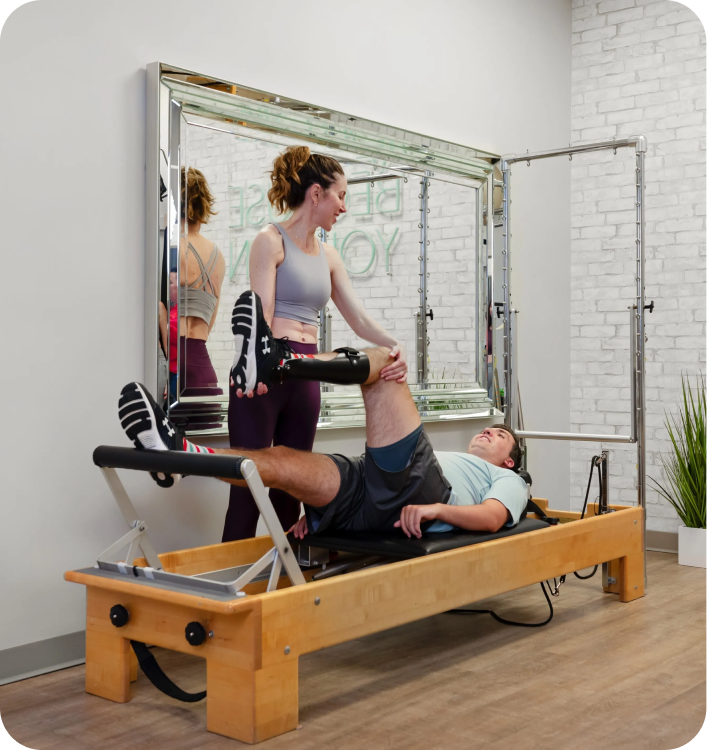
- Have you experienced real wins using neuro techniques: eye exercises, cranial nerve drills, vestibular resets, only to hit that first big change and immediately feel overwhelmed by "okay... now what?"
- Are you already getting great results in your practice, but curious how to add a neuro lens without throwing away the techniques you've spent years building?
- Do you already understand the theory of neuroplasticity, but want an adaptable framework that tells you exactly how to organize its key components into real application in the clinic or studio?
- Have you ever finished a CE course able to recite the research and the buzzwords, but still felt like you were guessing which tool to reach for with the client actually in front of you?
If you said yes to any of these, keep reading.
The Truth About Neuroplasticity: You Don't Have a Knowledge Problem. You Have an Application Problem.
A free live training for PT’s, OT’s, and advanced Pilates professionals who are done chasing certifications and ready to build a real framework for lasting change.
- Time: Live on September 10th at 2pm ET.
Can't make it live? Register anyway and we'll send you the replay.
You don’t have a knowledge gap.
You have an application gap, and until now, nobody has taught you how to close it.
You’ve taken the CECs and stay on top of the latest research and trends in movement.
But let’s be honest: when you are in a room with a client, it’s up to YOU to decide which tool, which cue, and which technique to use and why.
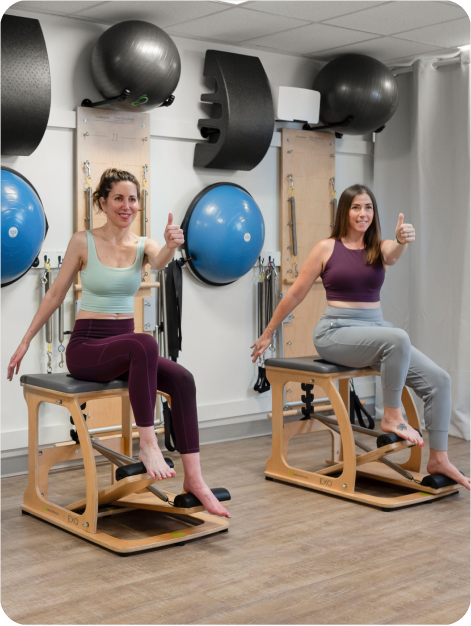
Research-supported theory is a critical component that guides the work we all do.
They give you guidelines and information, but don’t tell you what to do or how to do it when your go-to exercises, based on those guidelines, stop working.
In a world that craves absolutes, science isn't one of them.
Practitioners who want to position themselves as experts need to do more than understand the research, they need to APPLY it successfully, and rinse and repeat DAILY.
At the Neuro Studio, we teach clear frameworks for application, grounded in deep understanding OF WHAT WORKS AND WHY and explain it in simple terms. We teach you all the rules, and encourage you to break every single one, provided you have a deep understanding of, and respect for, each rule of neuroplasticity.
No other course will teach you this. No research study will reveal the secret to making your sessions easier, more effective, and honestly more fun for everyone involved..
You've taken the CEUs. You can define neuroplasticity, cite the principles, explain the theory to a client in thirty seconds, or maybe you are sick of hearing about it because no one has given you a good enough reason to care.
Because, let’s be honest, when you are in the room with a real client, it still comes down to guessing: which tool, which cue, which technique, right now.
That's not a knowledge gap. It's an application gap, and until now, nobody has taught you how to close it.
Truth Time: Most Neuro Trainings Are Theater. Here's What Actually Changes the Brain.
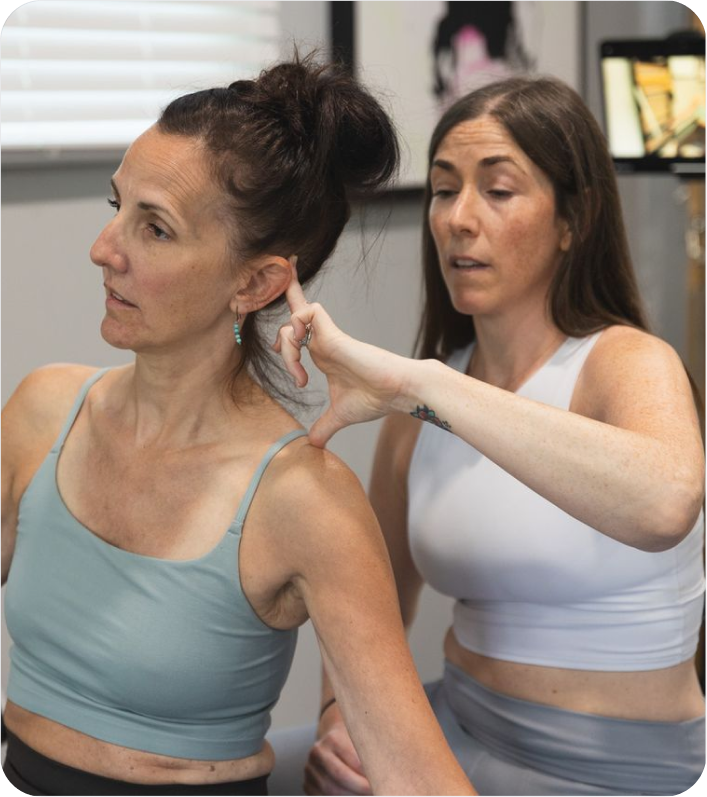
Anyone can point out what's wrong.
Anyone can learn the tricks to change the sensory input through the eyes or the cranial nerves and get an immediate change. And they are just that. Tricks.
Anyone can recite the research someone else ran.
These aren't rare skills. It's most of what continuing education already gives you — and you already have that.
What's rare is becoming a problem solver and a translator of your client's brain: looking at the specific person in front of you, not a diagnosis on a chart, and building the assessment that actually reveals what their nervous system needs right now.
Here's a hard truth: most assessments give us information, but information doesn't always give us the answer we need. Take the cerebellum, a critical, widely misunderstood part of the brain. I’ve stopped counting how many people talk about it online using a framework that actually contradicts what the cerebellum does.
Spend an hour with me and really understand the brain, motivation, and how movement translates into real change… without changing who you are as a teacher.
Don't miss this Training.
What You'll Learn
(LIVE, in this training)
- What neuroplasticity actually is — simplified so you not only understand it better, but can explain it better to your clients.
- Why understanding it is critical, but not the hard part — and what the real skill gap actually is.
- The difference between changing sensory input in the moment and creating change that lasts, and a simple way to tell which one you just did.
- Why the difference between accuracy and precision could improve all your results immediately.
- Why the smartest practitioners have stopped arguing about "the best technique" and started asking the brain and body a better question instead.
- A specific, cerebellum-based technique you can use with your very next client.
- A sneak peek into one of the many concrete, usable ways to assess your client's actual movement in real time — not a static test, but a live read of what their brain and body need.
- How to build a critical-thinking framework for knowing when to pull out each tool in your toolbox — instead of reaching for whatever technique buys you time to figure out what's next.
Who This Is For
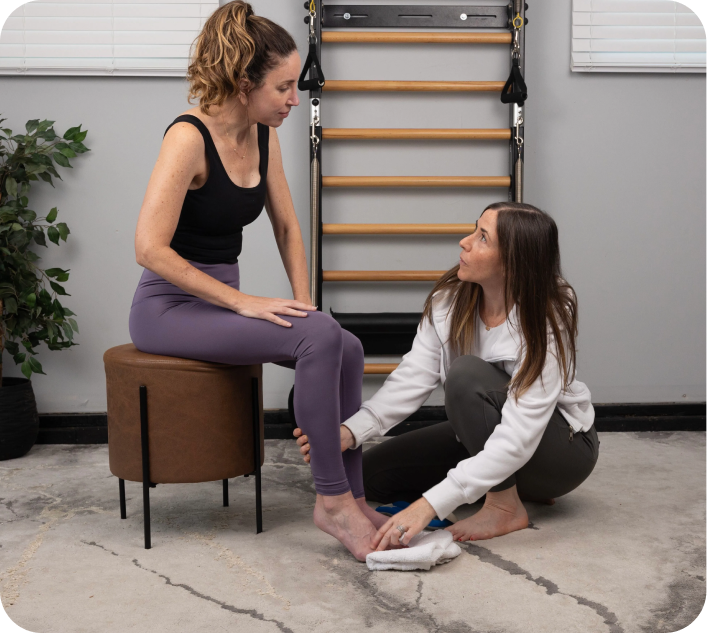
Physical Therapists, Occupational Therapists, and Advanced Movement Professionals who:
- Are tired of collecting certifications that hand you more tools but never teach you how to sequence them.
- Want to stop guessing whether an intervention actually worked, or just felt good in the moment.
- Are ready to individualize their approach to the brain and body in front of them, instead of running a protocol off a diagnosis.
- Want results that hold up outside the session — not just a great five minutes in the room.
- Want to build a business that's financially successful, without EVER putting profit before people.
Why This Is Different
Most training stops at "here's the technique." This training starts with the question underneath every technique: how do you know when to use it, and how do you know it worked?
You'll leave with a live demonstration of a real assessment and a real technique — not a reframed definition, something you can use with your very next client — plus the thinking framework behind it, so you're not just collecting one more tool. You're building the skill of reading the brain and body in front of you and knowing what to do with the answer.
That's exactly what you get here, taught by someone who doesn't just teach teachers. Meghann works with the most complex cases in the world, maintains long-term clients, conducts original research, and runs two businesses, all while completing her doctoral degree.
No bullshit. She opens up her entire playbook to anyone who asks.
About Your Instructor
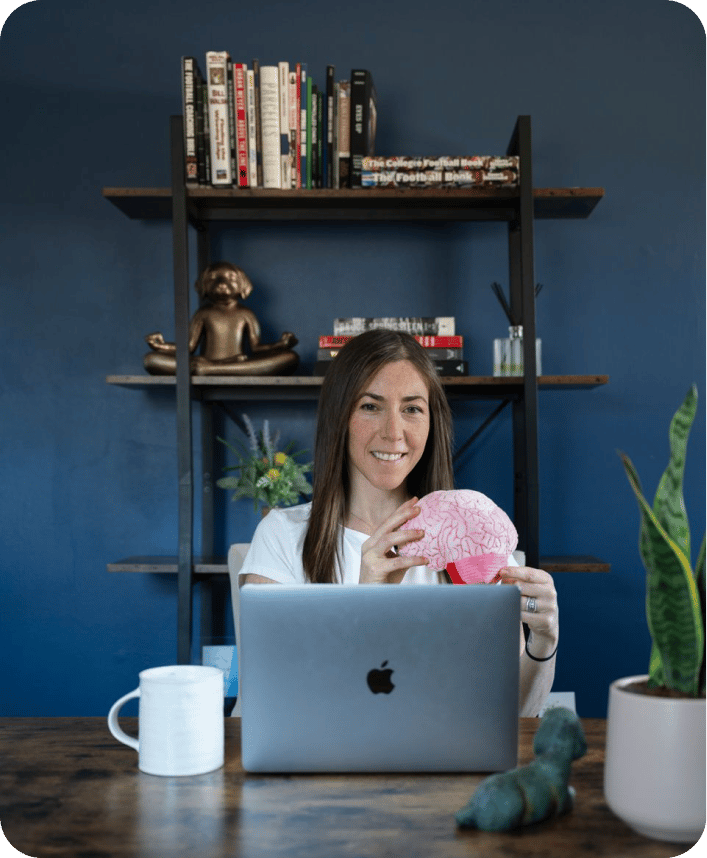
Meghann Koppele Duffy is the Co-Founder of The Neuro Studio, host of the Three Questions Podcast, and a leader in sensory-driven neurorehabilitation. A certified Pilates teacher since 2002, she holds certifications from the Kane School, PMA®, and IM=X, and began her career as a Certified Strength and Conditioning Specialist (CSCS). Meghann has a BS in Exercise Science from the University of Scranton and a Master's degree in Applied Physiology from Columbia University, and is currently a doctoral student at the University of St. Augustine, where her research focuses on improving transfer of learning for movement professionals through sensory reorganization and motivational science.
Over the past two decades, she has worked extensively with individuals living with complex neurological conditions and injuries, including MS, Parkinson's, cerebral palsy, stroke, and TBI, leading her to develop the innovative 4-Quadrant Stability Model™. She continues to work directly with some of the most complex cases in the field today, which means everything she teaches has been tested in real sessions, not just theory. She has taught internationally across the USA, Europe, Japan, Australia, and the UAE.
Why This Is Different
Most training stops at "here's the technique." This training starts with the question underneath every technique: how do you know when to use it, and how do you know it worked?
You'll leave with a live demonstration of a real assessment and a real technique — not a reframed definition, something you can use with your very next client — plus the thinking framework behind it, so you're not just collecting one more tool. You're building the skill of reading the brain and body in front of you and knowing what to do with the answer.
That's exactly what you get here, taught by someone who doesn't just teach teachers. Meghann works with the most complex cases in the world, maintains long-term clients, conducts original research, and runs two businesses, all while completing her doctoral degree.
No bullshit. She opens up her entire playbook to anyone who asks.
About Your Instructor
Meghann Koppele Duffy is the Co-Founder of The Neuro Studio, host of the Three Questions Podcast, and a leader in sensory-driven neurorehabilitation. A certified Pilates teacher since 2002, she holds certifications from the Kane School, PMA®, and IM=X, and began her career as a Certified Strength and Conditioning Specialist (CSCS). Meghann has a BS in Exercise Science from the University of Scranton and a Master's degree in Applied Physiology from Columbia University, and is currently a doctoral student at the University of St. Augustine, where her research focuses on improving transfer of learning for movement professionals through sensory reorganization and motivational science.
Over the past two decades, she has worked extensively with individuals living with complex neurological conditions and injuries, including MS, Parkinson's, cerebral palsy, stroke, and TBI, leading her to develop the innovative 4-Quadrant Stability Model™. She continues to work directly with some of the most complex cases in the field today, which means everything she teaches has been tested in real sessions, not just theory. She has taught internationally across the USA, Europe, Japan, Australia, and the UAE.
Neuroplasticity Free Training

Date & Time
September 10th at 2pm ET

Location
Live on Zoom
(Recording Available for 7 days)

Cost
Free for movement professionals
👀 What Pros Are Saying
“These techniques are next level. As a physical therapist I was shocked at how well Meghann’s techniques worked, which has led me to shift the way I approach all my clients. The only downside was I had to adjust my insurance documentation, but Meghann was so helpful and helped me translate it all into PT speak effortlessly.
— Mary
DPT
“I love Meghann’s teaching style. It is 100% approachable, while being incredibly high level. I walk away feeling empowered to learn more and dig into the important techniques she is teaching.
— Sarah
Pilates teacher
“I’ve taken dozens of courses, but this was the first time I felt like I could actually apply what I learned the very next day.”
— Teri S.
Pilates Instructor & Speech Pathologist
“Meghann’s approach helped me understand movement in a way that finally made sense, and changed how I teach forever.”
— Paula M.
PTA & Neuro Rehab Specialist
Frequently Asked Questions
No, we only ask that you bring an open mind and excitement to learn. A neuro background can help with terminology, but don't let unfamiliar terms scare you off. We're here to support you until they feel familiar, and any new term sounds intimidating the first time you hear it out of context.
The good news: this work applies to any movement professional working with real bodies and real variability.
Nope. This training stands on its own, you'll walk away with a usable technique and a framework shift, whether or not you ever take another step with us.
If you want to fully learn our framework, that takes real investment of time. This training stands on its own, though, and will introduce techniques and ideas you can start using immediately, even without the full picture.
Will you walk out of this an expert? No. Expertise takes time and that's why Neuro Studio teachers are the best in the business — they like to dig in and challenge themselves. People who cut corners will always cut corners, so we'd rather focus on people like you: the ones who are already great and just want to get better.
Register anyway, we'll send the replay, though the live Q&A is where a lot of the best insight happens. The replay will be available for one week after the training, so block off an hour to scratch that itch.
Roughly 60 minutes - with time built in to ask Meghann questions directly.
You already have the theory. This is where you get the framework.
Live on September 10 at 2pm ET. Space is limited to keep the Q&A useful — register now to hold your spot.
